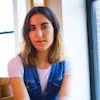
In this special episode host Grace Anna interviews Anna Veedra, a professional artist model, creator, and organizer living in Brooklyn, New York. Anna is also the founder of the Model Tea Project, a Brooklyn-based advocacy project and creative social club for artist models. Her goal is to provide a space for artist models to connect and exchange stories, wisdom, and resources. She hosts monthly tea parties for artist models in New York to gather, and has also created online communities connecting artist models around the globe. Anna hosts life drawing classes at her studio in Brooklyn as well.
In this interview, Anna shares her fascinating life story with us, as well as what the experience of modeling for works of art in today’s art world feels like. She then opens up about her advocacy work and her fight to get artist models the protection, rights, and recognition they deserve.
Listen to this special episode of ArtMuse ArtTalks:
This episode is produced by Kula Production Company.
INTERVIEW TRANSCRIPT
Hi listeners, host Grace Anna here. We will be releasing Season Three’s final episode, which shares the life story of the writer, poet, rockstar, and icon, Patti Smith, in the coming weeks. In the meantime, we are sharing a special episode with you, in which I interview the artist model, creator, and activist, Anna Veedra. In this interview, Anna shares her fascinating life story with us, as well as what the experience of modeling for works of art in today’s art world feels like. She then opens up about her advocacy work and her fight to get artist models the protection, rights, and recognition they deserve.
Anna is a professional artist model, creator, and organizer living in Brooklyn, New York. Anna is also the founder of the Model Tea Project, a Brooklyn-based advocacy project and creative social club for artist models. Her goal is to provide a space for artist models to connect and exchange stories, wisdom, and resources. She hosts monthly tea parties for artist models in New York to gather, and has also created online communities connecting artist models around the globe. Anna hosts life drawing classes at her studio in Brooklyn as well.
With that, let’s dive into my captivating conversation with Anna Veedra.
Grace Anna: Hi, listeners host Grace Anna here, and today I am joined by the Brooklyn-based professional art model, creator, and advocate, Anna Veedra. Anna, thank you so much for being here with me today.
Anna Veedra: Thanks so much for having me. I'm very excited.
Grace Anna: I'm excited too. So you have such a fascinating life story. I thought we could start with you introducing yourself to our listeners and telling us how your life story has shaped your ability to both become an artist model as well as an advocate.
Anna Veedra:You know, we all have our stories, but mine's unique in the sense that I'm an adoptee and a transracial adoptee, and so I think a lot of my kind of creative instinct comes from exploring a world where I felt kind of like a stranger.
I never thought I'd be an art model. I just fell into it. I had kind of a happy-go-lucky kind of creative life, where I was trying all these things and kind of exploring the world and trying to find myself and where I fit and it was something I just ran into, and it was creative, and it was a way to make money. And at first it was something I just casually did, but you know, there's something about doing something that you're not trying to do because you don't have an ego about it. You just show up every day and you kind of explore, and I think as a model that was a very big gift to me because I wasn't getting in my own way. So I would just show up every day and explore, and then after you know, 1,000 hours or 10,000 hours you build, you kind of just become good at what you do, and it's such a natural way of not trying. And I think a lot about modeling is about just showing up and being, and a lot of it is about storytelling. I think the great models that I know and that I really admire their work are great storytellers, and we're gonna talk about what makes someone a great storyteller. I think for me, it's people who have very storied lives. Like all the models I know, their lives are so fascinating, you know, and varied. Sometimes there's trials, and sometimes there's adventure.
I myself have had a very storied life. I'm a transracial adoptee, so I didn't really know my roots, at least on my mother's side. And so my family story is- they were Vietnam War refugees, and they were in Saigon when it fell, and I think that if we're gonna talk about what makes someone creative- I've thought about it a lot, that it's this curiosity, I think. Curiosity is what has made me creative because when you grow up as an adoptee and you have no context of where you come from, you have a lot of questions, and for me, it inspired the spirit of exploring, and not even at first knowing exactly what I was looking for, but you're just looking for something and you're trying to kind of understand the world and where you fit, and where you belong. And so I've had a little bit of that adventurous, creative, exploring spirit. And, I'm a storyteller, right? So I will say my favorite kind of storytelling is when you feel like you're living in the moment, and you have the opportunity to tell your story as you're engaging with life. So it's like a living story, any kind of moment that I can accentuate.
I love a good callback. So if I can do a call back in my life. For example...here's a story about my life. It paints the picture of why I'm an advocate, as well as someone who likes stories. So my mother, when she gave me away, the last thing she said to my father in this very last moment they had together, she handed me to him and she was like, "Please take care of our Crystal Belinda, and this is the greatest gift I could ever give you." My name was Crystal back then, and I changed my name when I was five, but that's a different story. And so, then he drove away and they never saw each other, and then she wouldn't see me for maybe two decades, right? And so when we finally connected, I had this thought and I wanted to search for my family, and I found an old address. I sent a letter. I reconnected with my family. It was a great reunion, a great celebration, and it kind of integrated back. And then several years later, we're into our reunion, there was a situation where my family needed my help, right? And, you know, as an adoptee, you're, kind of like a stranger still, but not. There's this little bit of ambiguity. But she needed my help, and I saw a situation where things were stuck. She needed to go to surgery, and I grew up in America. There were language issues, and so I went to go help. My family, they're from war, and we don't maybe talk about the effects, the generational effects of war, right? So there was a lot of trauma, and I guess the situation was a little more complicated. You know, families love each other, but sometimes dynamics kind of create situations that get tangled.
And so long story short, there was a situation where someone was taking care of her that maybe had some mental health issues themselves, and her environment maybe wasn't the best for her, and she needed surgery. And so I asked my aunt, who had a house, "You have all these houses that you rent out. Can you give me your house? Because we can agree to disagree about the house that my mother's living in, but if you could give me this house, and I could fully be her daughter, you know, 'cause there's a certain kind of duty, and give me the responsibility to take care of my mother, and we can live together, right? And it would be the greatest gift that you could ever give me." So I was like, I love a good callback, any kind of moment.
Grace Anna. Wow, thank you so much for sharing that. That's such a beautiful and powerful story, a real full circle moment and such a deep and important relationship in one's life. So thank you so much for sharing that. I really love, too, on your website, you wrote this beautiful quote where you say, "As a transracial adoptee, much of my work is informed by the complexity of the adoptee experience. My work reflects the chameleon-like adaptability adoptees tend to have, like character work, the curiosity that drives the exploration of my identity, and the adventure inherent in seeking." And I just think that so beautifully states exactly what you're saying here- how your experience has affected all of those things, and your ability to show up and tell stories and adapt. And adaptability is so important in being an artist model and being present, and that's why it's so important that we understand the lived experience of art models and how that lived experience informs the way that they show up for works of art. So thank you so much for sharing your life story and how that's informed your career as an art model.
I know our listeners will be very interested in what the experience of modeling for works of art is like. As you sit there, what are you thinking about? How hard is it physically? How physically demanding is holding a pose? And what are some of the challenges and some of the rewards of the experience? And we'd just love to hear your firsthand experience of what it's like, especially in today's age, modeling for works of art?
Anna Veedra: Yes. So for what I think about- listen, your mind is so expansive, so I have done many things. I have written screenplays in my head as I'm sitting there. I have, you know, just meditated, like if you just get really in the moment and you feel and hear everything, it's just a really good presence experience. But I will say that what I really enjoy- I think that part of the posing is you're posing with your imagination. There's something about creating a moment in your mind that creates an emotion for yourself. So even in the most subtle of ways, say you're sitting, in your mind you're sitting on a porch and you're looking out at a pond and you see the little cattail in the breeze. If you can inspire an emotion in yourself, then you inspire a moment that the artist wants to capture, you know? And so I do enjoy that, the imagination part of posing. I think it really adds a lot.
Grace Anna: Yeah. It's a real practice in both performance and presence and being present, and I love just what you said about the imagination and how that also informs your poses, and then the artist, it reflects the artwork that they're making as well. And that's why in that sense it is an art form in and of itself. It's this imaginative, and it can often be a playful experience.
Anna Veedra: Yes, and you know, there's different places that you can model, like animation studios where you're bringing the characters and more fantasy and shape language where you're gonna have costumes and it's a super playful expression. And then there's more of the fine art, where if it's a long pose, it’s a very subtle expression. Because you know, holding poses can be very laborious. It's physical labor. Models holding long poses- they're athletes.
Grace Anna: Absolutely.
Anna Veedra: It's very athletic ... I used to be a soccer player, and there's something very mental about physical labor. So I do think that- I'm really good at holding poses, and I think it's the mental endurance that I got from playing soccer. Sometimes I play games in my mind. So, when you're sitting there and people are drawing you, they're looking from you to their paper, and their heads are kind of going up and down- I like to assign a sound effect to everybody's head. And so, then in my head there's this symphony of playful music. So that's kind of a fun game to play. And then also, there's something with life drawing, the more someone looks at the model, the more that they're seeing what's in front of them, right? But if a person's staring at their page a lot, sometimes they're drawing from their mind, right? So it's very interesting to see, you know, if you're aware of who's looking at you more than others. You genuinely can tell, it affects the artwork, and so that's kind of an interesting observation too as a model.
Grace Anna: Yeah, it's such an interactive experience, the model perceiving the artist, the artist perceiving the model, and how each affects the other. How does the artist's energy affect your experience? Have you had times when an artist's energy feels maybe closed off or intense, or other times where it feels more open and inviting? I’m curious to hear your experience with that.
Anna Veedra: Yes, you know I've had the opportunity to stand in many different art rooms. And there's different ways that artists and models will engage in the different cultures, but there is, sometimes you can just feel the energy and the intention, like when everyone is focused, that’s contributing to my energy, they're so focused and it's almost as if it's like you can feed off each other. It's something that you feel in the room. And then sometimes, you can feel the energy just being very fractured, right? Maybe people are on their phone and they're not together. You can definitely feel the difference in the room.
Grace Anna: And that must affect the way that you're showing up as well, you know, you respond to that feeling.
Anna Veedra: I mean, I kind of just roll with it. I don't think too much about it. I do though, you know, I won't name names, but I have an opinion on how some schools are better than others, because I'm like-, "Wow, you guys are paying $50,000," and I know other places where it's like- you guys don't know what you're missing- just because things feel so fractured here, but in other places they're just so alive. But I do think it does affect the artwork.
Grace Anna: Yeah definitely. And how about role models? Do you have any favorite artist models from history, or favorite artists that you really admire?
Anna Veedra: I've been really looking into Ai Weiwei, he's not a figurative artist, but I've been deep diving into New York history and who's relevant and, again, the question of what mentalities come from places, artists that resonate, right? So Ai Weiwei is very resonant right now, he’s very big and as a model, the model's plight sometimes is that there's a disregard for the human, right? But then, one of the biggest artists is a human rights activist and so it makes me... I've looked at his work and at his quotes and his philosophies and he actually shaped a little bit of how I'm looking at my work as a model, and as an artist. It's questioning my interpretation of my role, and maybe what is the evolution of what I am? Why do I do what I do? You know, I've gotten more into advocacy, and there's a little bit of world-building going on. But is that not an extension of my job? Like in a classroom, I'm very attentive to the environment and how the art is made, you know, even just knowing what I say can make artists relax and open up. But then is not addressing the issues in the model industry, just an extension of trying to create an environment where art can be just potent and resonant? So his work…I've just been exploring his philosophies. They've been changing how I define what I do and why I do what I do.
Grace Anna: Beautiful. And I know Audrey Munson, her story has also really resonated with you. Can you tell us a little more about how you've connected with her story?
Anna Veedra: Yes. I actually reached out to you because of Audrey Munson. I listened to the podcast. I was hearing her name in all these model circles. I hang out with a lot of models. We have a lot of conversations and if you're gonna be a model in New York, Audrey Munson is the tale of New York, the tragic tale- how can someone be the first supermodel in the United States and then just be so forgotten and treated that way? It's an eerie story.
Grace Anna: Yes, Audrey's story is so powerful, this idea that this woman's face and body is all over New York City in some of the most prominent places in the city, you know, outside the New York Public Library, at Columbus Circle, on the Manhattan Bridge, in Brooklyn where I live, at the Brooklyn Museum, and we pass her image all the time, and she was the first American supermodel, and no one, well I don't wanna say no one, but very few remember her name and story. And in fact, she lived the majority of her life in an institution in upstate New York. Her prime of her career was quite short-lived, maybe about a decade in New York, and that idea of this image that's ingrained in the city and yet the name and legacy has been unfairly forgotten is really why I do what I do, and you have your advocacy work as well, because times need to change, and these stories need to be remembered, and these names need to be honored. And Audrey is just such a potent example of that need for change.
Anna Veedra: Yeah, it doesn't make any sense, right? I will say, though, that it is hopeful. I mean, the fact that your podcast exists, and the fact that her story is surfacing, I feel that it says something of the times, you know? That people are wanting to talk and readdress and question authorship and credit and contributions. And I don't know why there's a certain part in our culture that will just celebrate something, but then at the same time just completely disregard or not take care of it. But I do think when it comes to-if we are talking about the tradition of art and celebrating humanity, I genuinely think that part of the practice is really honoring and seeing the humanity in someone. I think it's just missing the plot otherwise, if it is practiced solely to extract what you want from the situation. And I wonder what kind of art and what kind of culture would be inspired and created if this contradiction did not exist at the center of the arts, right?
I wonder, because life drawing teaches you in its best form, it teaches you how to see, right? Like, there are constructs in your mind that automatically your mind will sometimes default to, but when you're learning to draw, you learn to see what is right there in front of you. It's like a development. It's like a practice. And so if this practice is being habitually practiced while completely omitting caring for the person that you're drawing from, my question is, does that affect the way that we look at people? Does it affect the way that we even connect to humanity? There's a certain- humanity in the world right now, the atrocities, there's a lot of atrocity and disregard of humanity that expresses itself in such visceral ways- war and genocide. And there's so much going on and I think everyone is like, "What are we gonna do?" It almost feels like this doom, right? But for life drawing, what if there's just this casual disregard to humanity even in this, even in the mellow art spaces? But is not art supposed to be... doesn't it develop visionaries? Doesn't it teach us how to see and teach us how to build and have empathy? So I would like to see a change in the way that we practice the most foundational skill in the arts, life drawing, right? Honor the life in life drawing is kind of my motto. I think it's part of the practice and you're missing the plot if you are forgetting to do that.
Grace Anna: Exactly. It's life drawing. It's not called object drawing, you know? It's life drawing, and it's honoring that life. And I completely agree about how the human element has been removed, and how that has a ripple effect, as we see, in what's going on around the world now. But I can say from an art historical point of view, that the human element is often lost as well. They're just starting- I've noticed museums are just starting, if you go to a show, to have the name of the person sitting for the portrait and maybe a little bit about them. But that overall has been greatly overlooked in how these artworks are written about, how they're appreciated, and so it's so important on like you said, on a fundamental level of how the art is created and how the art is recorded and how the art is celebrated, that that human element, it is the life of the work of art. You know, it's the core of the work of art, and to bring that focus back, I think is so important.
Anna Veedra: I fully agree. And if we're talking about life and art and we're talking about the study of the model, I've been deep diving and exploring the history of models and how we practice and there are two situations where the introduction of the model created an explosion in the arts. The first one is the Art Students League. I've been deep diving. The Art Students League is a school in New York, and its historical significance is that it democratized life drawing. It allowed anyone to come and draw. Before, it wasn't the case, right? It started off as a revolutionary school because it started an act of rebellion. The school at the time, they were shutting down their life drawing, and the students rebelled, and they're like, "No, we wanna draw from models." And so they spun up their school, right? And so the school allowed women to draw, which was a thing, right? But it exploded, meaning that it became so popular, and then it's kind of credited to, in part, with making New York a global center and a prominent global art center. And so that was an explosion. Another explosion is Disney. Disney heavily involves models. I even work in California whenever I go back. I'll work for all the animation companies, like Disney, DreamWorks-they're very centered on life drawing, so there's always life drawing offered to their artists. But life drawing was brought to Disney two years before Snow White, right? And then Snow White was revolutionary, a feature film animation. The rest is history. It's an interesting history- the genuine need for that resonant human in the art.
Grace Anna: Yes, if anyone hasn't looked up footage of how Snow White-I think it was the first feature length animation film, how that was created and the models that posed for those animation artists, I definitely recommend you looking it up because I've seen some of the footage and read a bit about it. It's totally fascinating.
So let's talk a little bit about your advocacy work. You have founded Model Tea, which is a community of artist models. You're based in Brooklyn, New York, but I know you also have created some international communities and online communities. You host your own life drawing classes. So tell us a little bit about Model Tea and some of your advocacy work here in New York as well as abroad.
Anna Veedra: Sure. So it’s called Model Tea, but the full name is The Model Tea Project. I have this really cute space in Bushwick, and it's just started with wanting to throw tea parties and gather models, right? It just started from wanting to have a space to gather, bring people, and have fun. You know, let's dress up, let's have fun, let's have tea. And there's a genuine need in New York for some changes. New York has long been behind on a sustainable rate. So my space is intended to gather and have conversations, and ask- how can we make it better? How can we build productively, right? Also, for Model Tea, there's a question of how our industry is changing so much right now, the question is, what is a modern model? And in the sense of development, of exploration, of what our industry is and going, and part of this question is for me asking myself that, and then providing a space where models can come together and ask that question and support each other as artists. There's something about models working that can be very solitude, because a lot of times you just go to a class, and you're by yourself, and then you see your coworkers maybe in works of art. So part of it is creating the space for people to connect and share, you know, be humans in the same room instead of hanging out with artists and then seeing artwork of your fellow coworkers, right?
So Model Tea has kind of grown a bit. We did a survey last year. Part of the issue is there needs to be, in my opinion, a narrative change around models, meaning people might not actually know what the conditions are like. So a lot of it is creating data and experiences to have a foundation of coming to the table with facts and being able to address it from a place of really just seeing what is there, you know? And so from that survey we did, there's also conversations. But essentially, there's three things that, well there's a lot of things, but three things that we're focusing on now. The first one is livable wage, and I feel like everyone in this country right now can kind of relate, there's so many jobs that need a livable wage, you know? We must sustain, as humans, we must sustain, right? If you go on Reddit, if you look up New York and the rates, the rates were the same like maybe 17 years ago. So it's like, maybe it would be good for an update. So that's a big one, and coming from a place of math, and values, meaning like if we're gonna value the life in life drawing, it's not what you can get away with paying someone, let's support this human at the center of this art form that we're celebrating.
So the second one is- phones are way out of control. These are nude models, right? So harassment, right? There's a little bit of an elephant in the room. Technology is moving so fast, right? And I think that we're a little bit far behind with... like, we're not in the '90s anymore, there are deepfakes and AI, and with how easy it is to take pictures. Right now, when a model is violated, a lot of times, it falls on the model, and there's nothing that they can do. And the burden just all falls on them. There's no HR in modeling. We're all independent contractors, so really addressing that. You know, models, we’re working together and exploring that. There's a lot of creative things, right? Part of it is figuring out- this is where the structural problem is happening. How can we support it? Like, for example, talking to different models in different communities around the United States. In San Francisco, they use mediators. Because there's a power dynamic sometimes, right? And models will be afraid to say something because they don't know if they're not gonna be asked back or not. They don't wanna be an issue. But if there's an issue and people are afraid to say anything, then it will continue to be an issue, right? So really trying to be really smart and figure this out- harassment with phones and tech. We partnered with this company, it's this creative event company called Parohu. It's run by this guy named Jesse, he’s an artist and in my mind he's very creative and innovative. And he was using magnetic locking bags, and I haven't seen that. And so me and a group of models experienced this life drawing with no phones at all. And I think there's something to be said about, you know, if we're talking about attention in a room, from both ends with these magnetic locking bags, then the model can relax because a lot of models have been violated, right? They don't talk about it, but as soon as you do, you're always gonna be scanning the room, right? So it subtracts your attention. And then with artists- I don't know about you I'd say I have a phone addiction, right? So if people are automatically going to their phone, it fractures the drawing's creative space. So we're exploring how to do things differently.
Grace Anna: Yeah, I was gonna say when you go to, say a live talk show or things like that, they make you put your phone away, you can't record, and I think it makes total sense. Modeling is already- you're in such a vulnerable position, and then to add in the element of people being able to take pictures on their phone, and then you've no control of where those pictures go, and it just exacerbates that vulnerability. I think the idea of both what you said about a mediator or a liaison that can act between the institution or the artist and the model as well as protections against phones and maybe the magnetic bags or asking before the class begins or the session begins to have the phone away will allow the model to feel safer and for the artists and students to be more present. So I think it's a really good idea.
Anna Veedra: Yes! Listen, there's more than one way to solve a problem too, right? So magnetic locking bags or there's people that do this thing called the phone burrito where they wrap the phone and staple it, right? Or there's the little cubbies. So there's more than one way to fix this problem. I guess it's just thinking about it and realizing that maybe it is a problem that is important to consider with someone who is being so vulnerable in the art space.
Grace Anna: I think another really interesting point, I know we've talked about this before, is your mention of AI because we're in a time in the world when artists are starting to feel that vulnerability that models have felt for so long. You know, now AI can imitate art, and can imitate artists. Artists might start feeling, "Oh, are we gonna be replaced? Are we necessary?" And models have actually been feeling that vulnerability for centuries, that lack of control over their image, of what happens with their image, of that feeling of being overlooked, and their importance being overlooked. And so now artists might be able to relate or start to empathize with that feeling because they are now experiencing it with the introduction of AI, and I just think that is such an interesting current phenomenon that's happening right now.
Anna Veedra:Yeah, I mean AI arguably is changing the world as we know it. It's changing our relationship to art, why we do it, our jobs, why we do it. There's our relationship to being a human. There's something that is just- to answer your question, yes, I've had moments where I see the comments, and artists are using the exact same talking points that models have been using for centuries. Like, "Well, the AI wouldn't exist if my art wasn't here" and I was like, "Well, if the model wasn't there, your artwork wouldn't exist. Welcome to the struggle," you know?
Grace Anna: Exactly. They can finally understand the struggle and the fight that artist models have been putting forth for a long time.
Anna Veedra: I feel like there's been this conversation that's been needing to be had for centuries. But because there's a shift, perhaps there's an opportunity to have it because now artists are in the same boat, and maybe they understand the question of resources and authorship and what makes something valuable. Even on social media, now that AI is here, they're like, "Well, you know, AI will maybe take care of stuff, but they don't have anything on your story." And it's like, okay, but then if a story makes something valuable, you can't extract someone's story in essence and then tell them that they don't matter, you know? So there is something just very, very interesting with that and this long overdue conversation- we can all come together and restructure how we view things, how we see things, and maybe that’s for everyone's benefit now because everyone is needing to have that.
Grace Anna: Yes, and sometimes it takes someone being affected personally to understand how it might feel for someone else- it’s that personal experience that allows them to empathize and understand in ways that maybe they were blind to before. So I think it's a very interesting dialogue, and hopefully will be a benefit of AI in that it launches these sorts of conversations and maybe more protective rights for both models and artists. And I'm not saying AI is the enemy, but there's that saying, "Nothing unites like a common enemy" and maybe there's that feeling of- this can bring some sort of union and understanding amongst models, artists, and institutions.
Anna Veedra: Yeah, there's probably good things about AI, right? I mean, we could talk about the environment stuff. I guess the question's open if there are good things about AI, but here's the question that when I look at it- because of this parallel between now artists' experience and models' experience, the issue is about authorship and where resources go. It's about the source. So if someone is taking credit, like now AI takes the credit of this artwork and the style that an artist has created and invested in, then none of the resources go to its source, then that source cannot continue to survive in some ways. It just kind of depletes. And then the genius and that spark where that comes from, I feel like that should be fed. You know, that's why I think recognition and financial structures honoring all people who contribute is important.
Grace Anna: And like we were talking about before, bringing the human back, you know AI is such a stark example of the importance of the human and humanity and the human element of art, so I think it proves that point as well, which is important.
Well, I love the Model Tea Project. I think you're doing amazing things. I've been to your studio. It's such a lovely space. To our listeners based in New York, Anna and I are in talks of having a talk at some point where we talk a little bit more about artists models of history and celebrate artist models in New York. And I love the quote from your website. You say, "The Model Tea Project grew from a vision, a project to support models as artists and foster creative communities that are vibrant, healthy, and rooted in respect." And I think that's just such a beautiful way to describe the mission behind the Model Tea Project and what you're doing here in New York, and I love the idea of tea parties and community, because as you said, it's such an isolating practice, so to be able to be in community is so so important and it's such a beautiful thing that you're doing.
Anna Veedra: Thank you. And I'm glad you're a part of it too.
Grace Anna: It's a pleasure. Do you have any final thoughts, anything you'd like our listeners to know about the experience of being an art model and anything we might have not covered yet today?
Anna Veedra: I'm just gonna say, I think it's a very interesting time to be a model, right? And I think that I would like to inspire, as a model, as an artist, there's something about the world that's changing around us, right? And a redefinition and a re-exploration of a narrative of who we are and why we do stuff. So, I guess I would just ask- inspire everyone to, especially models out there or even artists, to question and reimagine. I think it's such an interesting time. It's this opportunity to kind of really reimagine. When there's such a breakdown, there's an opportunity for rebuilding something that's new. So I would encourage exploration in reimagining why we do what.
Grace Anna: I think that's beautiful. The hope of ArtMuse is to inspire reexamination of works of art from history or figures of history. And at the same time, I think your story and your words and your work is reminding us to reexamine the present and how art is created and how we engage with art in the now. And because it is the now, how can we shift the narrative and what can we do to inspire that change? And I think that's so important.
Anna Veedra: Yeah, I think for changing a narrative, there's something about art and the whole relationship of models and artists that has trained us to look at models as a prop or an object, but there's something about a model that stands in the very center of the creative practice. And I think that especially now, I see models that are organizing all over the world. There is something going on with models. I feel like there is a certain expertise, actually, of the model's voice that I genuinely think that is a lens of a model as an expertise within the creative process is, I think, a valuable lens to look through.
Grace Anna: That's beautiful and beautifully put. Well, that's a beautiful note to end on. Thank you so much, Anna. This was such a fascinating conversation. Thank you so much for sharing your story with us. If anyone is interested in learning more about the Model Tea Project, you can find them online as well as on Instagram, if you wanna share the Instagram handle. But this has just been such a pleasure to speak with you, and we'll keep our community posted as we formalize an in-person event over the next few months. So thank you so much, Anna.
Anna Veedra: Yes, thanks for having me.